Tofu
CJK character comparison tool: How did it come to be
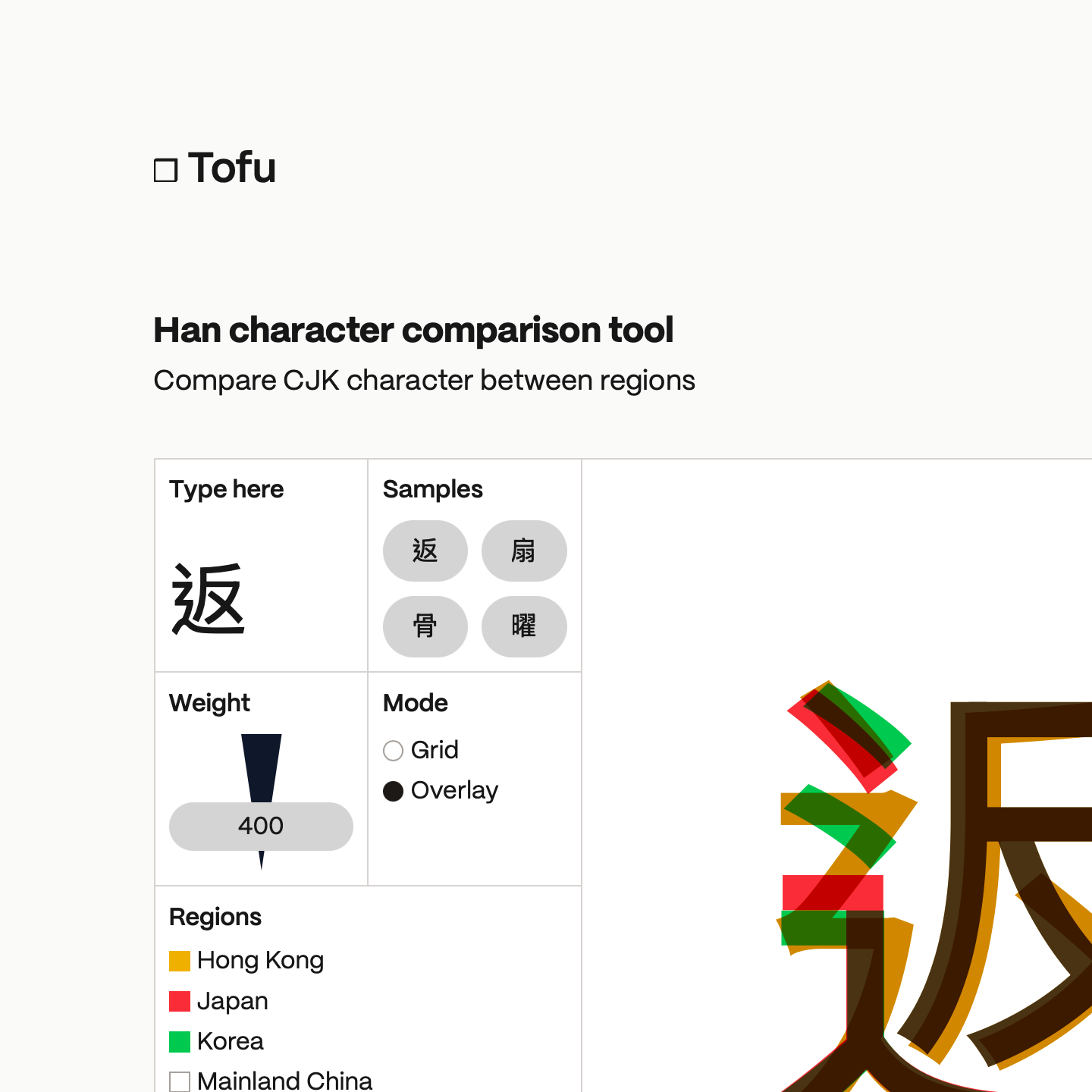
Tofu is a tiny web app to compare how the same Chinese, Japanese and Korean (CJK) character is displayed differently in different places.
All three languages use Han characters in their writing. However, each place has its preferred way to display each character, so it’s useful to have a tool to compare them side by side.
This is the story of how it came to be.
“I hate it so much”
Being from Hong Kong, I’ve always known from travelling around East Asia the different ways places prefer to show Han characters.
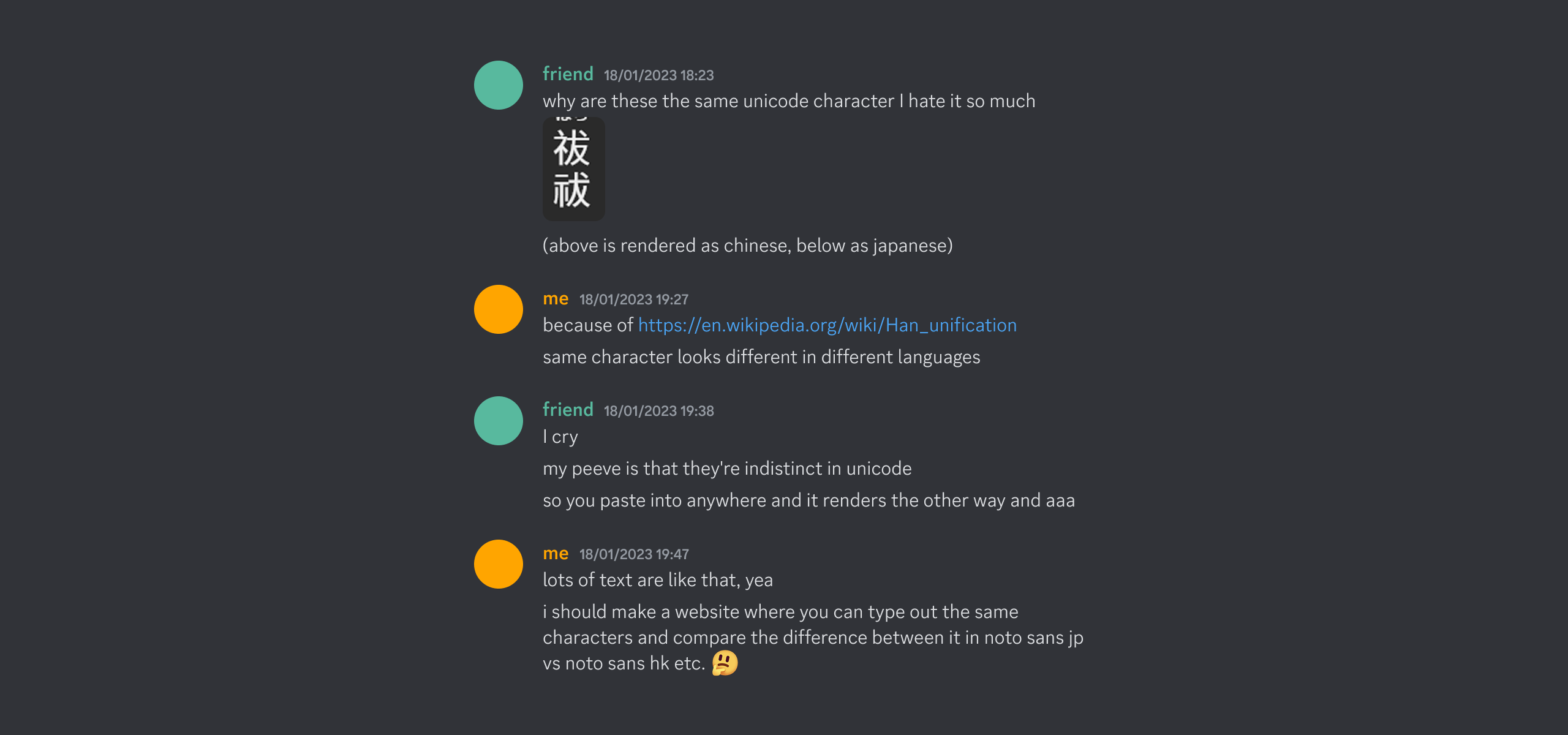
On a Wednesday evening, a foreign friend messaged the Discord group. He found it frustrating the same Unicode character can be different depending on the language.
I explained the reason, but this also gave me an idea: maybe it’s possible to create a tool to compare them between regions now.
In 2014, Adobe and Google released Source Han Sans (also known as Noto Sans CJK). For the first time, there is a free typeface with different regional versions, but in an identical style.
With this in mind, I started to design and prototype.
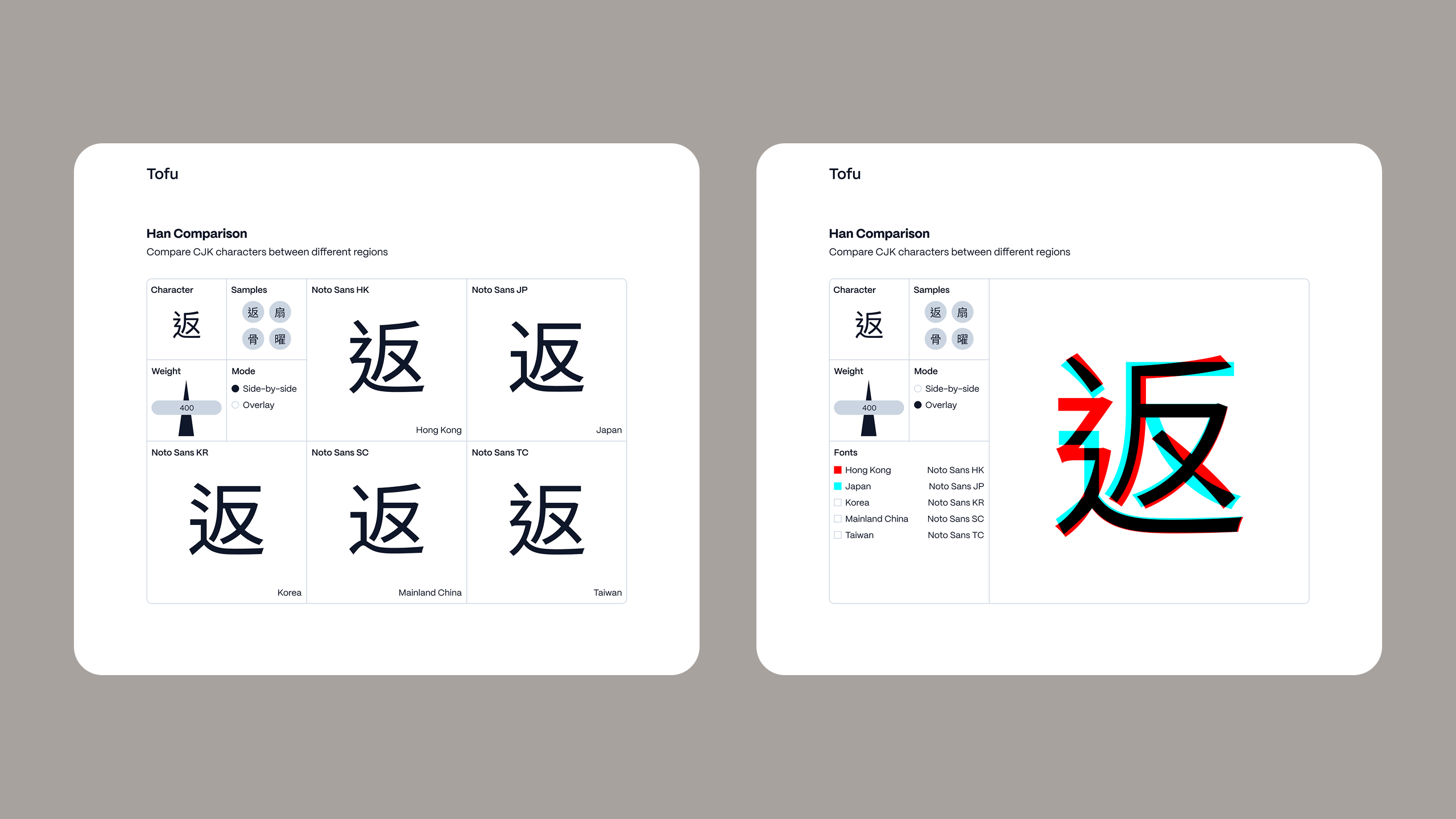
It quickly came together. Since there are five versions of Source Han Sans, I decided to use a six square grid, and one for changing the character, weight and display modes.
Start Dash
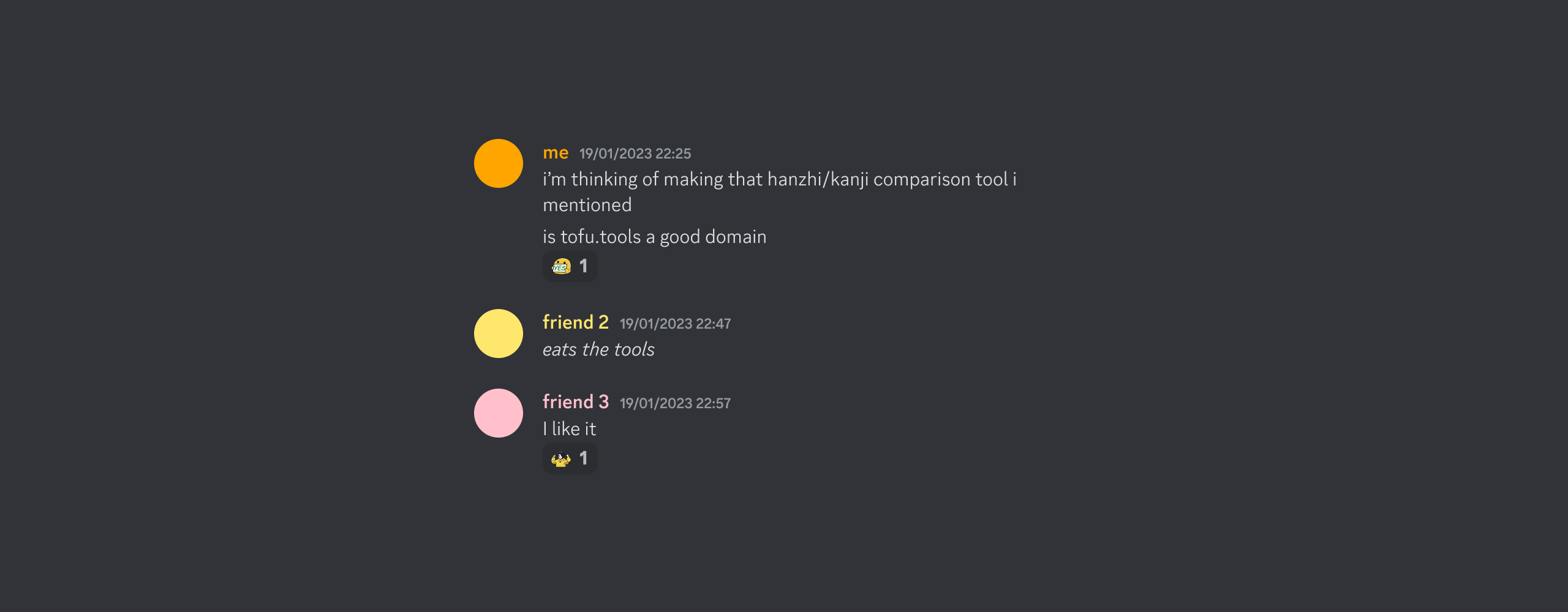
Like all builders, before actually building it, I had to buy the domain. My friends helped with choosing the domain “tofu.tools”.
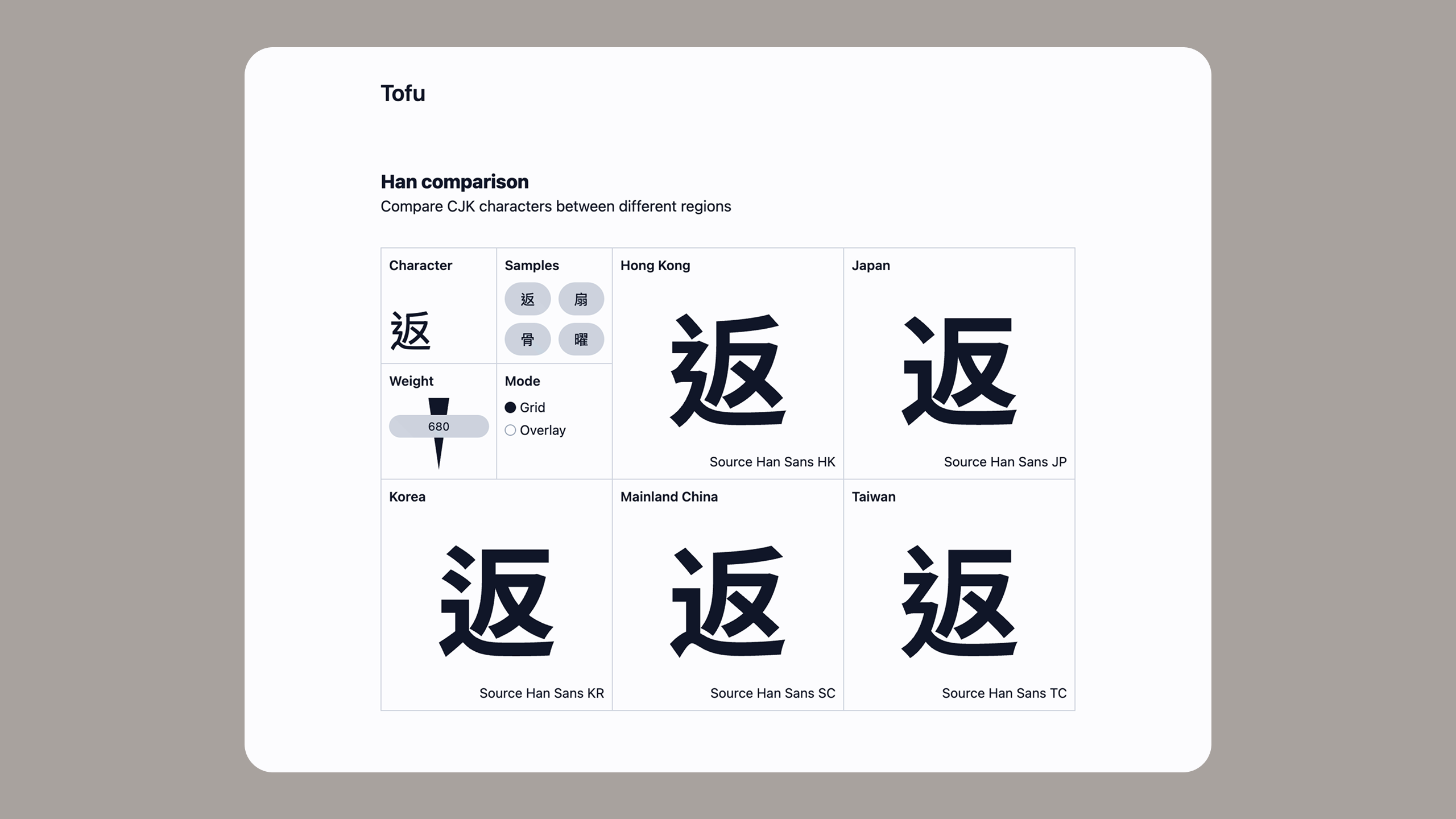
As this happened to be just a week before the Spring Festival holiday in Hong Kong, I spent my holiday focused on building this new idea.
Using Astro and Svelte, I managed to build it in under 3 days.
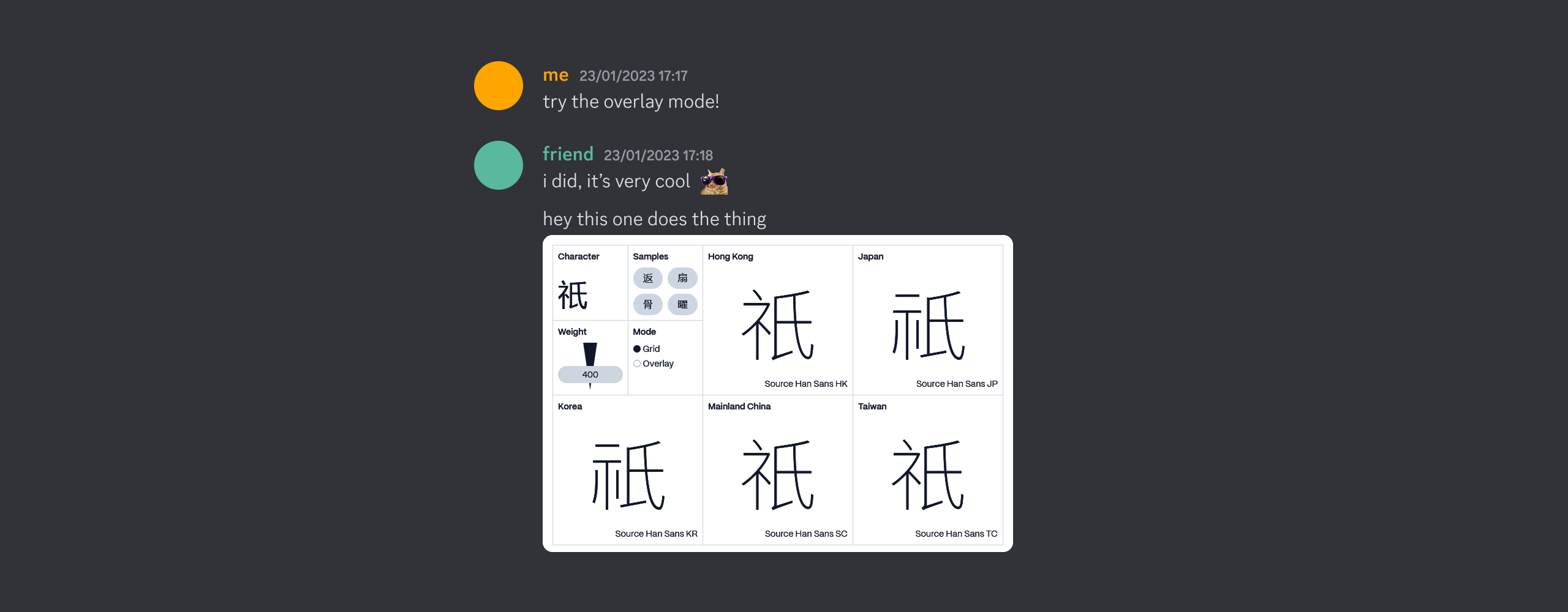
Since this is a 1-person project, the same friends helped with testing. With their help, I ironed out bugs and launched it publicly less than a week after I had the idea.
Gallery
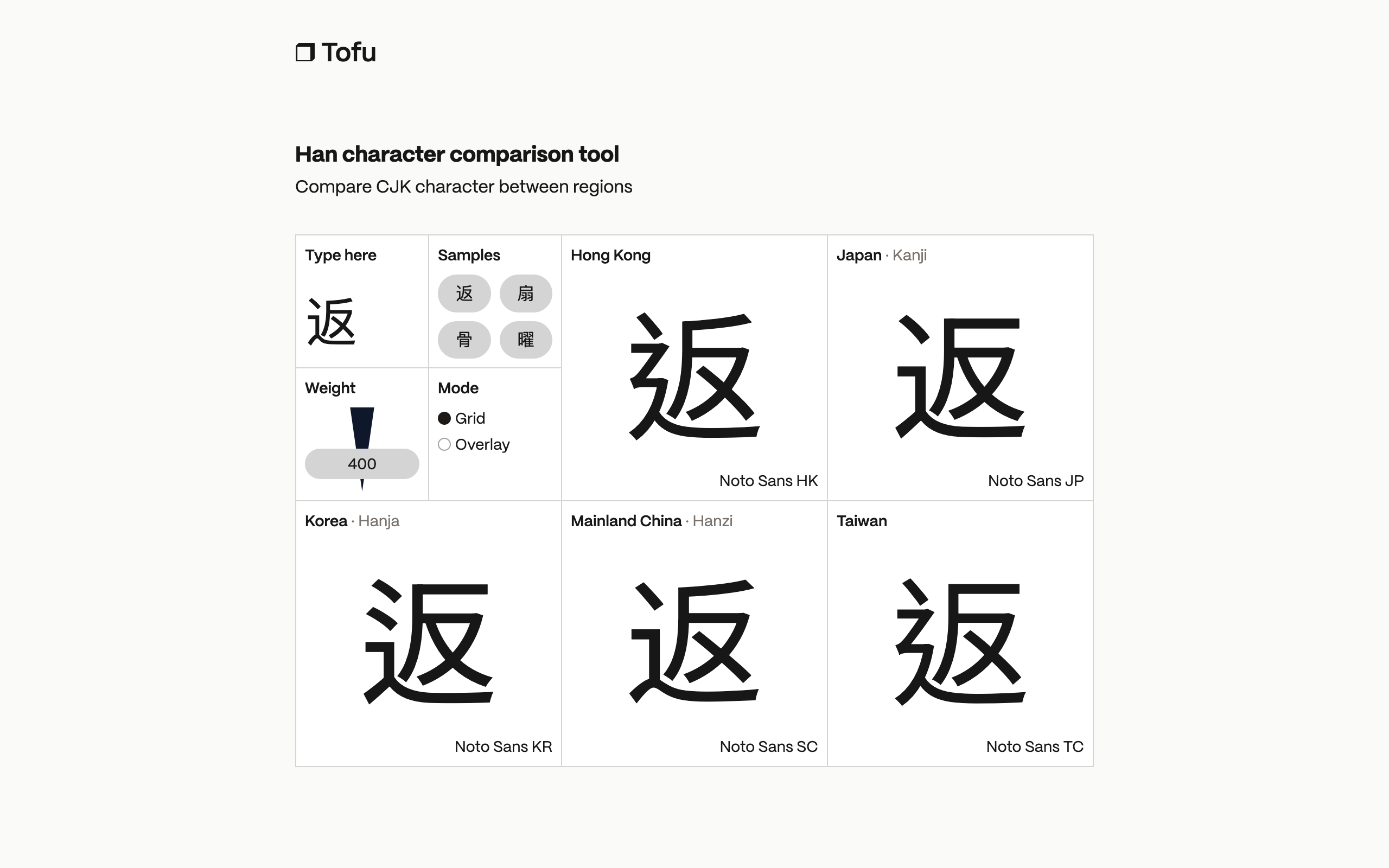
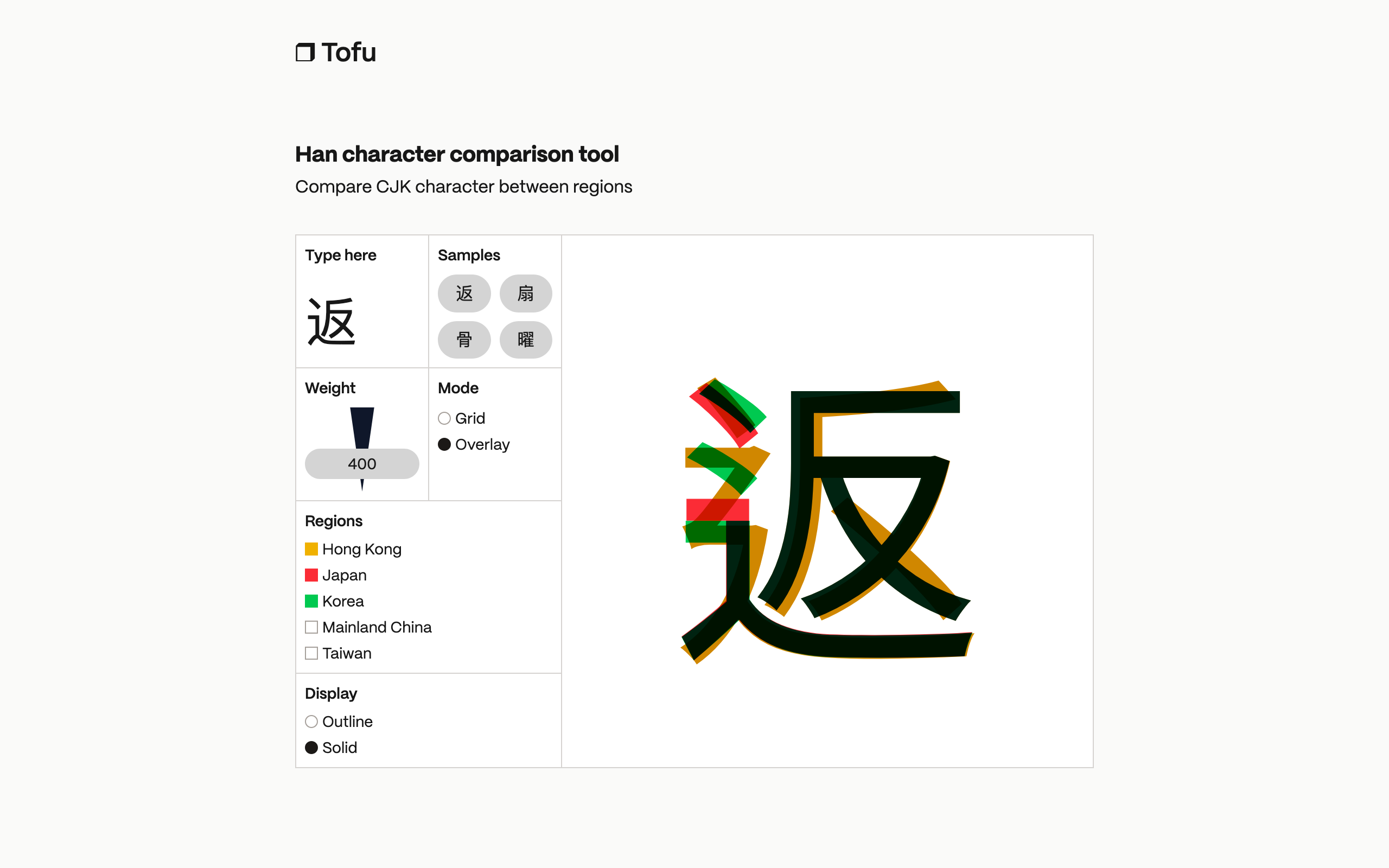
In the final version, I toned down the design to a warmer tone in place of the prototype’s cold white and grey colours.